Who are the Fulani in Nigeria?

Updated: Sep 20
The Fulani are one of the largest people groups in Nigeria, with an estimated population of about 15 million people spread primarily across the northern and central regions of the country. Traditionally, many Fulani have been pastoralists and cattle herders, moving seasonally with their animals in search of pasture and water. Over generations, pastoral Fulani have developed relationships and systems of cooperation with farming communities in many parts of Nigeria, including seasonal arrangements around grazing, farming and the use of agricultural land.
Photos show a herder leading his cows, a herder tending to his cows, and the traditional
symbiotic relationship between farmer and herder depicted on Nigerian currency.
Nowadays the Fulani are not all nomadic cattle herders. Fulani communities include nomadic, semi-nomadic, and settled populations. Many Fulani live permanently in villages, towns and cities. Some have never lived a nomadic life, while others combine pastoralism with farming, trade, education and other professions. There are Fulani doctors, lawyers, teachers, academics, engineers, civil servants, entrepreneurs, business people, journalists, artists and religious leaders.
The photos show Dr Sumayya Adam who graduated medical school, Mr Usman Bello holding
his award for developing community schools for Fulani children, and Reverend Buba Aliyu.
The Fulani are also a people of remarkable artistic creativity. Their calabash bowls and containers used for milk, yoghurt and other foods are often beautifully decorated, sometimes with intricate patterns and woven grass coverings. Traditional clothing is equally admired for its beauty, craftsmanship and suitability to the environment. Depending on the region and community, Fulani dress may include flowing robes, turbans, hats, embroidered garments, colourful fabrics and beautiful jewellery.
The photos show a colourful variety of traditional clothes and jewellery, a traditional hat and calabash containers and spoons
Fulani women have traditionally played important roles in family life and the pastoral economy. They are often skilled in milk processing, producing products such as yoghurt, butter, cheese and other dairy products. They may also participate in trade, handicrafts and the decoration of household items and clothing. Beads, jewellery, hairstyles and other forms of personal adornment have long been important expressions of beauty, identity and cultural heritage among many Fulani communities.
The photos shows Fulani women at a festival with beautiful calabash bowls, Fulani young women studying at the Federal Polytechnic Daura showcasing their beautiful traditional clothes at the Cultural Day Celebrations
The Fulani have a rich oral tradition. Fulfulde, the Fulani language, carries generations of history, wisdom, poetry, songs, proverbs and stories. Knowledge has traditionally been passed from one generation to another through storytelling, songs, family instruction and observation. Traditional music and instruments, including instruments such as the "mbaggu" (drum) and "tummude" (calabash) in some Fulani communities, are important parts of cultural expression. Music accompanies celebrations, courtship, community gatherings and everyday life.

BIRI ADE Cameroun Waynabe_dourobeh (Official_Music_video) - YouTube
Click to watch this joyful song from Fulani singer Biri Ade.

GÉNÉRAL SANDA BORO YAHI MOUIGAL ( Vidéo clip)
Follow the link to watch this beautiful Fulani love song from Fulani singer Sanda Boro.

Greetings | Basic Introduction to Central Nigerian Fufulde (Part 2)
Fulani people speak the Fulfulde language. Follow the link to learn some greetings!!
Family and community are central to Fulani society. Respect for parents and elders, hospitality toward visitors, generosity, loyalty to family and concern for community relationships are highly valued. Marriage is an important social institution, bringing together families as well as individuals, and is often accompanied by distinctive clothing, music, food, gifts and celebrations.
One important concept associated with Fulani cultural values is Pulaaku. Although its expression varies among Fulani communities, Pulaaku is often associated with ideals such as dignity, self-control, courage, patience, modesty, endurance, hospitality and respect. These values have traditionally helped shape how people understand personal character and proper conduct within the community.
Fulani values, "pulaaku" is often associated with ideals such as dignity, self-control, courage, patience, modesty, endurance, hospitality and respect.
The Fulani also possess remarkable environmental knowledge. Pastoral communities have traditionally developed a detailed understanding of landscapes, grasses, trees, water sources, weather patterns and seasonal changes. They know how to identify suitable pasture and water, how to care for animals in difficult conditions and how to adapt their movements according to the changing environment.
The photos show a herder pouring water into a wooden trough for the cows,
and cows grazing on land that is not being farmed (Source: WTN team)
In these days of environmental awareness, traditional Fulani culture has much to teach. As many pastoral Fulani move regularly with their herds, they tend not to gather excessive possessions. The things they carry are often practical, useful and versatile, while still being beautifully decorated. Traditional houses and shelters are generally designed to be practical and unobtrusive, often using locally available natural materials and adapted to protect people from rain, wind and the intense heat of the sun.
The Fulani also have a remarkable knowledge of cattle. Pastoralists can identify individual animals, understand their behaviour, recognize different breeds and know which grasses, trees and water sources are suitable at different times of the year. Cattle are not merely economic assets; in pastoral Fulani culture, they are closely connected to family history, livelihood, identity and social life.

Did you know that what is traditionally known as "Moroccan" leather is actually mostly produced by the Fulani people?
When their animals were slaughtered for meat, the skin was dried and preserved for use and for sale. As far back as the 15th Century, northern Nigerian cities such as Kano and Sokoto were industrial centres for the tanning industry.
Traders bought these hides and took them to Morocco for further processing, selling them to European merchants who labelled it Moroccan leather.
So the next time you enjoy using a "Moroccan" leather bag or purse, remember that it is likely that a Fulani once nurtured the cows it came from!
Source: North Book
Traditionally, pastoral Fulani have contributed significantly to food production and culture in Nigeria, particularly through livestock and dairy products. Their cattle provide meat and milk, while products such as yoghurt and other forms of processed milk are consumed across the country. Items such as cows horns and tails are used in traditional ceremonies for all ethnic groups. The xylophone pictured below made using cow horns is a musical instrument found in many northern Nigerian churches and played for worship.
The pictures show a Fulani lady selling yoghurt, a butcher in the market selling beef from Fulani cattle,
and a xylophone (WTN) made using cow horns which can be heard every week in many northern Nigerian churches.
Fulani culture has also changed with time. Education, urbanization, technology, modern employment and changing economic conditions have created new ways for Fulani people to live and work. Many settled Fulani families have homes, cars, businesses and university-educated members. Most Fulani speak several languages, participate actively in modern professions and maintain their cultural identity while living completely modern urban lives.
Dr. Aliyu Muhammad, a prominent car dealer (Sarkin Mota) in Abuja, appeared wearing traditional Fulani attire and passionately defended his identity.
Dr. Aliyu directly challenged negative perceptions: “Some people hear Fulani and think of only one thing, cattle rustling, herdsmen, violence, but we are more than the headlines, we are more than assumptions. I am Fulani, I am educated, I am ambitious, I build businesses, I create jobs, and I contribute positively to the society.”
He emphasized diversity within the Fulani community: “There are Fulani doctors, lawyers, professors, entrepreneurs, leaders, young people changing the narrative every day. Culture is not a crime, language is not a threat, and tribe is not a limitation.”
He concluded: “This isn't about denying problems, it is about refusing to let problems define an entire people. I am Fulani and I represent excellence.”

S
The majority of Fulani are Muslim, while significant Fulani Christian communities also exist, particularly in parts of northern and central Nigeria. Faith has become an important part of the identity and daily life of many Fulani, whether Muslim or Christian. Fulani Christians, in particular, have their own stories of faith, discipleship, perseverance, family and service that deserve to be heard.
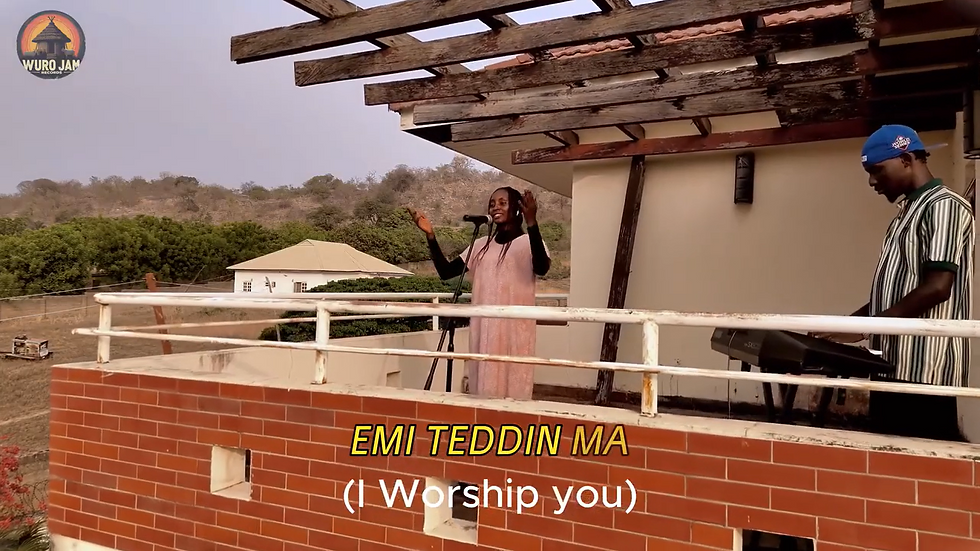
Click to listen to Fulani Christians singing the popular worship song "Waymaker" in the Fulfulde language.
"You are here, moving in our midst, I worship you, way maker, miracle worker, promise keeper, light in the darkness, my God, that is who you are......"
Today, Fulani people are found in almost every sector of Nigerian society. Some continue the important work of producing meat, milk and other livestock products. Others are involved in education, medicine, law, engineering, business, politics, agriculture, technology, religious work and many other professions.
Like every large people group, the Fulani are diverse. They are not a single uniform community, and the actions of individuals should never be used to define millions of people. There are peaceful Fulani, hardworking Fulani, generous Fulani, educated Fulani, pastoral Fulani, settled Fulani, Christian Fulani, Muslim Fulani, young Fulani, elderly Fulani, urban Fulani and rural Fulani.
The photos show Professor Abba Tahir, Registrar of Prime University Abuja, some Fulani
children playing (WTN), and an elderly Fulani lady walking with a basin of goods on her head.
A tiny minority of the 15 million Fulani people in Nigeria commit violent acts, but those individuals should not be allowed to define an entire people. The millions and millions of peace loving Fulani are also frustrated with the small number who do acts of violence and they also feel helpless and hurt by the media campaign against their entire people group based on the acts of a few. This unfair ethnic profiling means that simple day to day tasks such as walking down the street can be dangerous for Fulani people - and even those who look like them - earlier this year we highlighted the tragic case of Abdullahi Bello who was murdered when a mob murdered him mistakenly thinking he was a Fulani man.
Millions of Fulani across Nigeria are simply getting on with the ordinary work of living: raising families, going to school, farming, herding cattle, running businesses, teaching, lecturing, studying, worshipping, caring for their communities and contributing to the country.
There are millions of untold Fulani stories—stories of peace, generosity, resilience, creativity, faith, family, friendship and perseverance.
Let us tell their stories.
Let us enjoy their culture, listen to their music, learn their language, appreciate their art, celebrate their hospitality, learn from their environmental knowledge and understand the diversity within their communities.
Let us listen to the stories of Fulani women, children, farmers, herders, students, professionals, elders and young people.
Let us meet the Fulani beyond the stereotypes.
Let us discover the people behind the headlines.
There are millions of Fulani stories waiting to be told.
Millions of stories of peace.
Let’s tell them.
Let’s celebrate peace.


Comments